

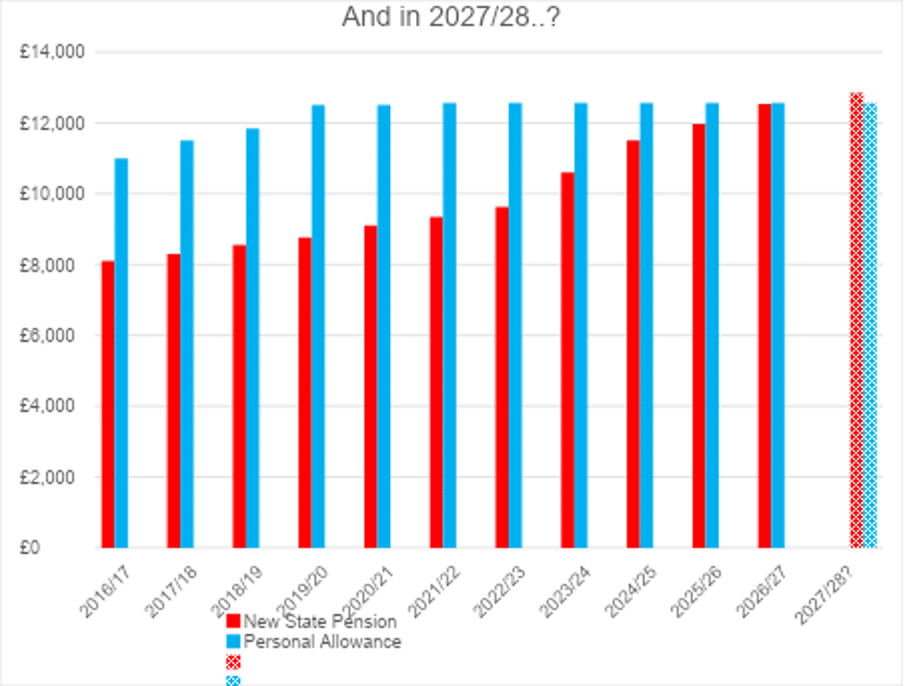
The ingredients to determine next April’s increase in the State pension are now clear and suggest a problem deferred until the 2026 Budget.
Source: DWP, HMRC
The basis for increases to the old and new State pension is the ‘triple lock’, which sets the change in April to be the greater of:
- Earnings growth for the period May to July in the previous year,
- Consumer Price Index inflation to September of the previous year, or
- 2.5%.
The earnings growth figure, 4.7%, was published in mid-September. While the inflation data will not arrive until 22 October, prices would have to rise by an unlikely 0.9% between August and September for annual inflation to exceed 4.7%. That means State pensions should rise by 4.7% with the results shown below, unless the Office for National Statistics revises its earnings numbers.
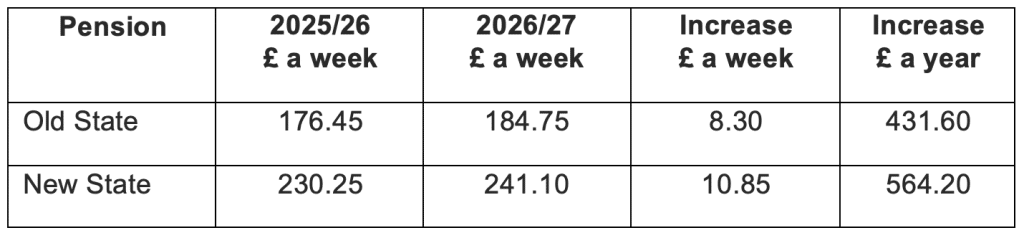
The new State pension, which applies to anyone reaching State pension age after 5 April 2016, will be equal to £12,537 a year from April 2026. The income tax personal allowance is £12,570, as it has been since 2021/22. Given that the minimum State pension increase is 2.5%, and the personal allowance is not due to increase before 2028/29, that means from April 2027, the new State pension will exceed the personal allowance and, all other things being equal, attract a small income tax liability.
In practice, there are many people who already have a total State pension (including, for example, the State second pension) that exceeds their personal allowance. However, for the new State pension alone to surpass the personal allowance will be a milestone. Politically, it will be unfavourable, coming as it does after the Winter Fuel Payment controversy. To make matters worse, once the State pension exceeds the personal allowance, there is no going back unless the personal allowance is increased at a faster rate than price inflation.
There are also some potentially difficult problems for HMRC as the State pension is paid without PAYE deduction of tax applying. Will HMRC issue simple assessments to collect under £100 of income tax from those who onlyreceive the State pension?
One potential consequence worth remembering in your retirement planning is that if your State pension more than covers your personal allowance, any private pension will be fully taxable.
The statistics within this document have been sourced and provided by a third-party, Tax Briefs.
Tax treatment varies according to individual circumstances and is subject to change. The Financial Conduct Authority does not regulate tax advice.
A pension is a long-term investment not normally accessible until 55 (57 from April 2028). The fund value may fluctuate and can go down, which would have an impact on the level of pension benefits available. Past performance is not a reliable indicator of future performance.
Servo Private Wealth Limited is not responsible for the accuracy or content of third party sources.
Servo Private Wealth Limited is an Appointed Representative of Best Practice IFA Group Limited which is authorised and regulated by the Financial Conduct Authority, the registration number is 223112.
This article is for general information only and is aimed at retail clients.
Approved by Best Practice IFA Group Limited on 10/10/2025